



A chimney can look solid from the ground while moisture, weather exposure, and normal aging slowly damage the masonry above the roofline. In Greensboro, NC, seasonal rain, humid conditions, temperature changes, and occasional winter freezes can make small chimney defects more noticeable over time.
If you know what warning signs to watch for, you can often address chimney deterioration before it spreads to surrounding masonry, flashing, or interior finishes.
Quick answer: Your chimney may need repair if you notice cracked or missing mortar, loose or spalling bricks, water stains near the fireplace, damaged flashing, a deteriorating chimney crown, leaning masonry, or pieces of brick and mortar around the property. Greensboro homeowners should pay particular attention after periods of heavy rain or winter temperature swings because existing masonry defects can allow additional moisture into the chimney.
What local homeowners should know
-
Cracked mortar joints can create pathways for water to enter an otherwise solid-looking chimney.
-
Greensboro’s rainfall and humidity make moisture management an important part of maintaining exterior masonry.
-
Older homes in established areas such as Fisher Park and Irving Park may have chimneys that have experienced decades of weather exposure.
-
Chimney problems are not always visible from inside the home, especially when deterioration begins above the roofline.
-
Early inspection can help determine whether localized masonry repair is appropriate or more extensive work is needed.
Why Chimney Damage Matters in Greensboro
Chimney damage matters in Greensboro because masonry sits exposed to rain, humidity, wind, sun, and changing temperatures throughout the year. Once cracks develop in mortar, brick, flashing, or the chimney crown, moisture can enter those openings and contribute to additional deterioration.
Homes throughout Guilford County experience a mix of hot, humid summers, rainy periods, and colder winter weather. Water that enters porous masonry or existing cracks can become particularly troublesome when temperatures fall near or below freezing.
Chimneys on older homes around Fisher Park, College Hill, and Lindley Park can also have aging mortar simply because of decades of exposure. Newer homes around northwest Greensboro are not automatically immune. Installation details, flashing problems, impact damage, and water entry can affect chimneys of different ages.
At Greensboro Handyman & Masonry LLC, we understand that chimney repair is not simply about appearance. After this first introduction, we focus on helping local property owners identify damaged areas and understand which repair approach fits the condition of the masonry.
Local Chimney Conditions and Field Observations
Local chimney conditions commonly make moisture exposure and deteriorating masonry worth watching closely. Without project-specific inspection data or verified client statistics, the most useful approach is to treat these as professional field observations rather than claims about how frequently particular defects occur in Greensboro.
Exterior chimneys are especially exposed because several components must work together to keep water out. Brick and mortar form the structure, while the crown or cap protects the top and flashing helps seal the transition between the chimney and roof.
A failure in one area can affect another. A cracked crown, for example, may allow moisture to reach masonry below it. Failed flashing can instead direct water toward the roof or interior wall around the chimney.
That is why the source of chimney moisture should be identified rather than assuming every water stain is caused by the same defect.
7 Warning Signs Your Chimney Needs Repair
The clearest signs your chimney needs repair are deteriorating mortar, damaged bricks, moisture intrusion, flashing problems, crown damage, movement, and falling masonry debris. Greensboro homeowners can monitor these conditions from safe locations and arrange a closer professional evaluation when damage is visible.
1. Cracked or Missing Mortar Joints
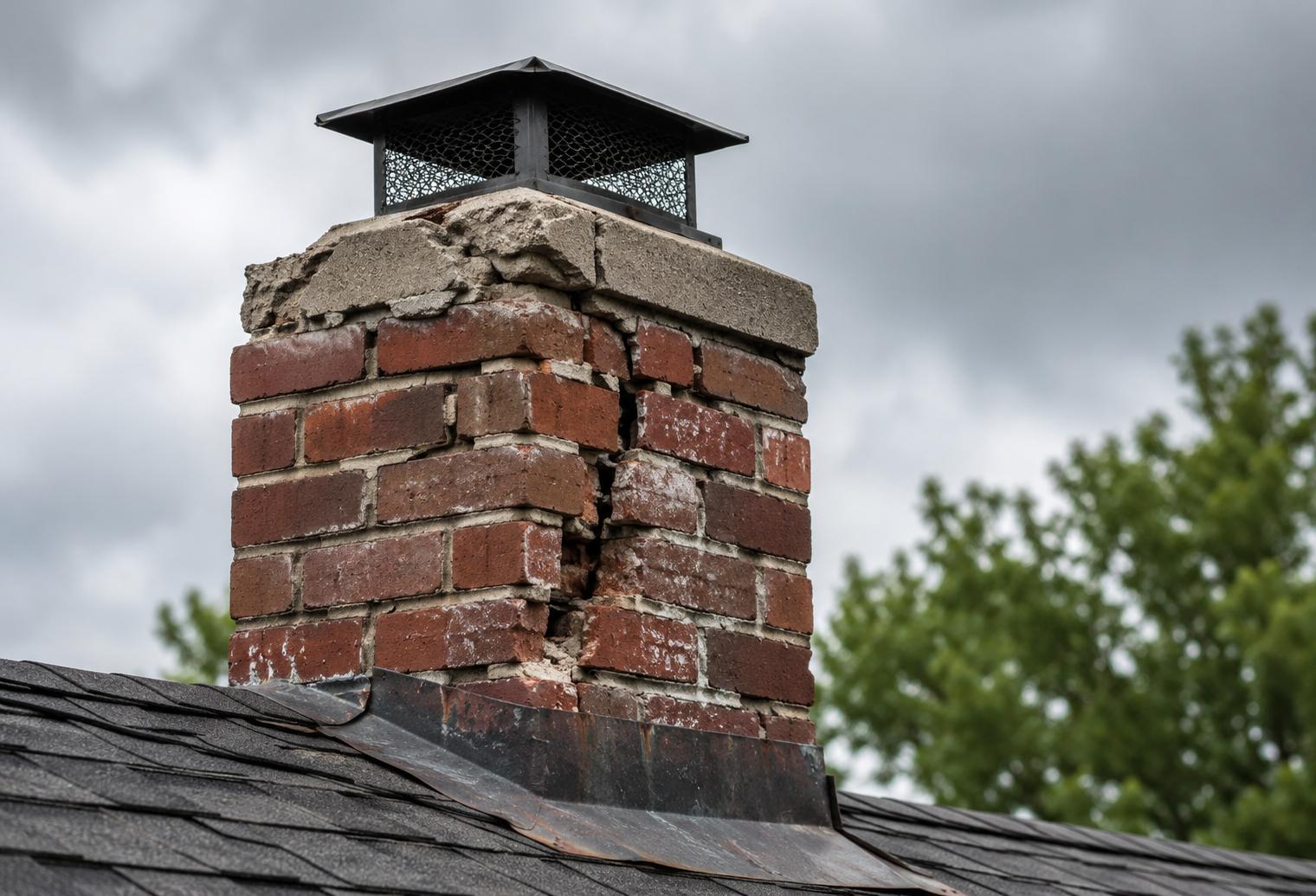
Mortar joints hold individual masonry units together and help protect the chimney structure from moisture. If joints become cracked, recessed, loose, or missing, water can find easier paths into the masonry.
From the ground, look for visible gaps or areas where mortar appears noticeably more eroded than neighboring joints. Avoid climbing onto the roof just to get a closer look.
2. Spalling, Cracked, or Loose Bricks
Spalling occurs when the face of a brick begins flaking, peeling, or breaking away. You may also notice cracks running through individual bricks or pieces of masonry collecting near the base of the chimney.
Because Greensboro receives regular precipitation throughout the year, damaged masonry should not be treated as purely cosmetic. Once the protective face of a brick deteriorates, continued moisture exposure can contribute to further wear.
3. Water Stains Near the Chimney or Fireplace
Water stains on ceilings, walls, or surfaces near a fireplace can indicate that moisture is entering somewhere around the chimney or roof intersection.
The source is not always obvious. Flashing, masonry joints, the chimney crown, roofing components, or another nearby opening may be involved. A proper evaluation should identify where the water is entering before repairs are selected.
4. Damaged or Separated Flashing
Chimney flashing helps seal the point where the chimney passes through the roof. Gaps, corrosion, separation, or poorly sealed flashing can allow rainwater to reach roofing materials or the home’s interior.
After heavy rain in the Triad, a new stain near a chimney can be a reason to have both the masonry and roof transition examined rather than simply covering the visible stain.
5. A Cracked or Deteriorating Chimney Crown
The chimney crown is the protective surface at the top of many masonry chimneys. Cracks or deterioration in this area can allow water to enter from above.
Crown problems can be difficult to see safely from the ground. If other chimney damage is present, an inspection of the upper components may reveal defects that are not obvious from the yard.
6. A Leaning or Visibly Shifting Chimney
A chimney that appears to lean, separate from the house, or develop significant structural cracking needs professional attention.
Movement can have several potential causes, and visual appearance alone cannot establish what is happening below or behind the masonry. If you notice a meaningful change in alignment, avoid attempting a cosmetic patch before the underlying condition is evaluated.
7. Brick or Mortar Pieces on the Roof or Ground
Pieces of brick, mortar, or masonry debris near the chimney can be a direct sign that part of the structure is deteriorating.
For Greensboro property owners, debris after a storm or freeze should prompt a visual check from a safe location. Falling material may indicate a localized defect, but widespread deterioration can require a more extensive repair plan.
When to Call a Professional for Chimney Repair
You should call a professional when chimney damage involves loose masonry, recurring water intrusion, significant cracks, movement, inaccessible roof-level components, or deterioration that appears to be spreading. Small visual checks are reasonable for homeowners, but diagnosing structural masonry or working at roof height introduces risks that make DIY investigation less appropriate.
You can safely look for stains, fallen debris, visible mortar gaps, and obvious changes from ground level. Photos taken from a safe location can also help you track whether a crack appears to be changing.
Roof climbing, removing bricks, rebuilding sections of masonry, or attempting to diagnose a leaning chimney should generally be left to professionals with the appropriate experience and equipment.
Common Causes of Chimney Damage Around Greensboro
Common chimney damage around Greensboro can result from moisture intrusion, aging mortar, temperature changes, flashing failure, and neglected small cracks. The exact cause should be determined by examining the affected chimney rather than assuming that one regional condition explains every problem.
Moisture exposure: Rainwater can enter open joints, cracked masonry, damaged crowns, or failed transitions.
Aging mortar: Mortar naturally weathers over time, making older masonry chimneys particularly important to monitor.
Temperature changes: Wet masonry can experience additional stress during cold periods, particularly when temperatures cross the freezing point.
Flashing defects: Damage where the roof meets the chimney can contribute to leaks even when much of the brickwork remains sound.
Delayed maintenance: A small crack or open joint can become a larger repair area if water continues reaching vulnerable materials.
These conditions can affect properties across Greensboro and nearby Guilford County communities, including Jamestown and Summerfield.
How to Help Prevent Chimney Masonry Problems
The best way to help prevent chimney masonry problems is to keep water-entry points under control and address visible deterioration before it spreads. Seasonal visual checks are particularly useful after severe weather, prolonged rain, or colder winter periods.
From the ground, homeowners can periodically look for changing mortar joints, cracked bricks, debris, discoloration, or obvious crown damage. Inside, check ceilings and walls near the chimney for new staining after rain.
Keep roof drainage functioning properly so water is not unnecessarily directed toward vulnerable areas of the home. If you notice damage that requires roof access or masonry removal, stop the DIY inspection there and arrange professional service.
What to Expect From Chimney Repair
Chimney repair should address the specific damaged components rather than simply covering visible symptoms. Depending on what an inspection finds, the work may involve repairing mortar joints, replacing damaged masonry units, correcting crown deterioration, addressing flashing-related areas, or rebuilding a section that is no longer serviceable.
Not every damaged chimney requires complete rebuilding. Likewise, not every crack can be solved with a surface patch.
The goal is to determine the extent of deterioration and choose a repair that matches the actual condition of the chimney.
Common Chimney Repair Mistakes
Common chimney repair mistakes include covering cracks without identifying their cause, ignoring water intrusion, and attempting unsafe roof-level DIY work. A better approach is to diagnose the source first and then match the repair to the affected masonry or water-management component.
Mistake: Sealing over a crack without determining why it developed.
Consequence: The visible defect may return or surrounding deterioration may continue.
Better approach: Determine whether the issue involves mortar aging, movement, moisture, or another condition.
Mistake: Treating an interior water stain as only a paint problem.
Consequence: Moisture may continue entering behind the finished surface.
Better approach: Investigate the chimney, flashing, and surrounding roof area.
Mistake: Climbing onto a steep or wet roof to inspect the chimney.
Consequence: A relatively straightforward inspection becomes a fall hazard.
Better approach: Perform ground-level observations and use professional help for inaccessible areas.
A Common Local Chimney Scenario
A common Greensboro chimney scenario starts with a minor exterior defect that becomes noticeable after repeated rain. This is an illustrative local scenario, not a specific customer case study.
A homeowner in an established Guilford County neighborhood might first notice a small mortar gap or a faint ceiling stain near the fireplace. After another period of rain, the stain becomes more noticeable or small mortar fragments appear below the chimney.
Rather than patching the interior stain alone, the better approach is to inspect the exterior masonry, chimney top, flashing area, and surrounding surfaces. That broader evaluation helps identify whether the repair is localized or part of a larger deterioration pattern.
Chimney Repair Solutions
Chimney repair solutions depend on whether the problem is primarily damaged mortar, individual bricks, water-entry components, or more extensive masonry deterioration. The right service should correct the affected area while preserving sound portions of the chimney whenever practical.
Possible solutions can include mortar-joint repair, replacement of deteriorated bricks, masonry restoration, crown-related repairs, and work associated with damaged chimney sections. The appropriate scope depends on what is found during inspection.
Repair vs. DIY: Which Option Makes Sense?
DIY monitoring makes sense for safe visual checks, while professional repair is the better option when masonry must be removed, rebuilt, accessed from the roof, or evaluated for movement. Greensboro homeowners should separate routine observation from repair work that involves fall hazards or structural uncertainty.
A homeowner can photograph cracks, monitor stains, clear accessible debris, and note when problems appear. Those observations can be useful when discussing the issue with a professional.
Professional service becomes more appropriate when the problem involves recurring leaks, deteriorated mortar across a larger area, loose bricks, chimney movement, or work above a safely accessible level.
Chimney Repair Service Areas
Chimney repair needs are not limited to one part of Greensboro, and similar masonry conditions can affect properties throughout the surrounding Guilford County area. We can discuss service availability for homeowners in Greensboro and nearby communities such as Jamestown and Summerfield.
Specific service coverage should always be confirmed when scheduling.
The Cost of Ignoring Chimney Damage
Ignoring chimney damage can allow moisture and masonry deterioration to affect a larger area, potentially turning a localized repair into more extensive work. Waiting is particularly risky when bricks are loose, water is reaching interior finishes, or cracks appear to be growing.
A small mortar defect does not automatically mean a major repair is required. However, continued exposure to Greensboro weather can make an existing opening more vulnerable to additional moisture.
Frequently Asked Questions About Chimney Repair
How do I know if my chimney needs repair in Greensboro, NC?
Your chimney may need repair if you see cracked mortar, damaged bricks, water stains, loose masonry, deteriorated crown areas, or visible movement. Greensboro homeowners should also watch for debris after storms or colder weather. A professional evaluation can determine whether the problem is localized or requires more extensive masonry work.
Does Greensboro weather damage brick chimneys?
Greensboro weather can contribute to chimney deterioration when moisture reaches existing cracks, open mortar joints, or damaged masonry. Regular rainfall, humidity, sun exposure, and periods of colder temperatures all expose exterior masonry to changing conditions. Good maintenance focuses on limiting water entry and correcting defects as they develop.
Can cracked chimney mortar be repaired?
Cracked chimney mortar can often be repaired when the surrounding bricks and underlying structure remain suitable for localized masonry work. The appropriate repair depends on the depth and extent of deterioration. If cracks are associated with movement or widespread damage, simply filling the visible joint may not address the underlying problem.
Should I inspect my chimney after a storm in Guilford County?
A ground-level visual check after significant storms can help you spot obvious chimney changes without putting yourself at risk. Look for fallen masonry pieces, new cracks, displaced materials, or interior water stains. If the chimney requires roof access for a proper evaluation, professional inspection is the safer approach.
Are older Greensboro homes more likely to need chimney masonry work?
Older homes may have chimney mortar and masonry that have experienced many years of weather exposure, but age alone does not determine whether repair is necessary. Established neighborhoods such as Fisher Park and College Hill contain older housing stock, making routine observation worthwhile. The actual chimney condition should guide repair decisions.
Can a chimney leak even if the bricks look fine?
Yes, a chimney can leak even when much of the visible brick appears sound. Water can enter through flashing, upper chimney components, small mortar defects, or other transitions that are difficult to see from the ground. Identifying the entry point is more useful than assuming the brick itself is responsible.
Is a leaning chimney an urgent repair issue?
A visibly leaning or shifting chimney deserves prompt professional evaluation because movement can indicate a problem beyond ordinary surface wear. Do not rely on cosmetic patching if the chimney appears to be separating from the building or changing alignment. The underlying cause and extent of movement should be assessed first.
When is the best time for chimney repair in Greensboro?
Chimney problems should be evaluated when they are discovered rather than waiting for a particular season if water entry, loose masonry, or movement is present. For routine maintenance, homeowners can use milder weather to check visible conditions and plan repairs. Timing also depends on the repair method and suitable working conditions.
Protect Your Greensboro Chimney Before Damage Spreads
Recognizing chimney problems early gives local homeowners a better opportunity to address deteriorated masonry before additional exposure affects a larger area. From older homes near downtown to properties throughout Guilford County, routine observation and timely repairs can help preserve this exposed part of the home.
Get a Clear Plan for Your Chimney Repair
We can help you evaluate visible chimney masonry problems and understand the repair options appropriate for your property.