



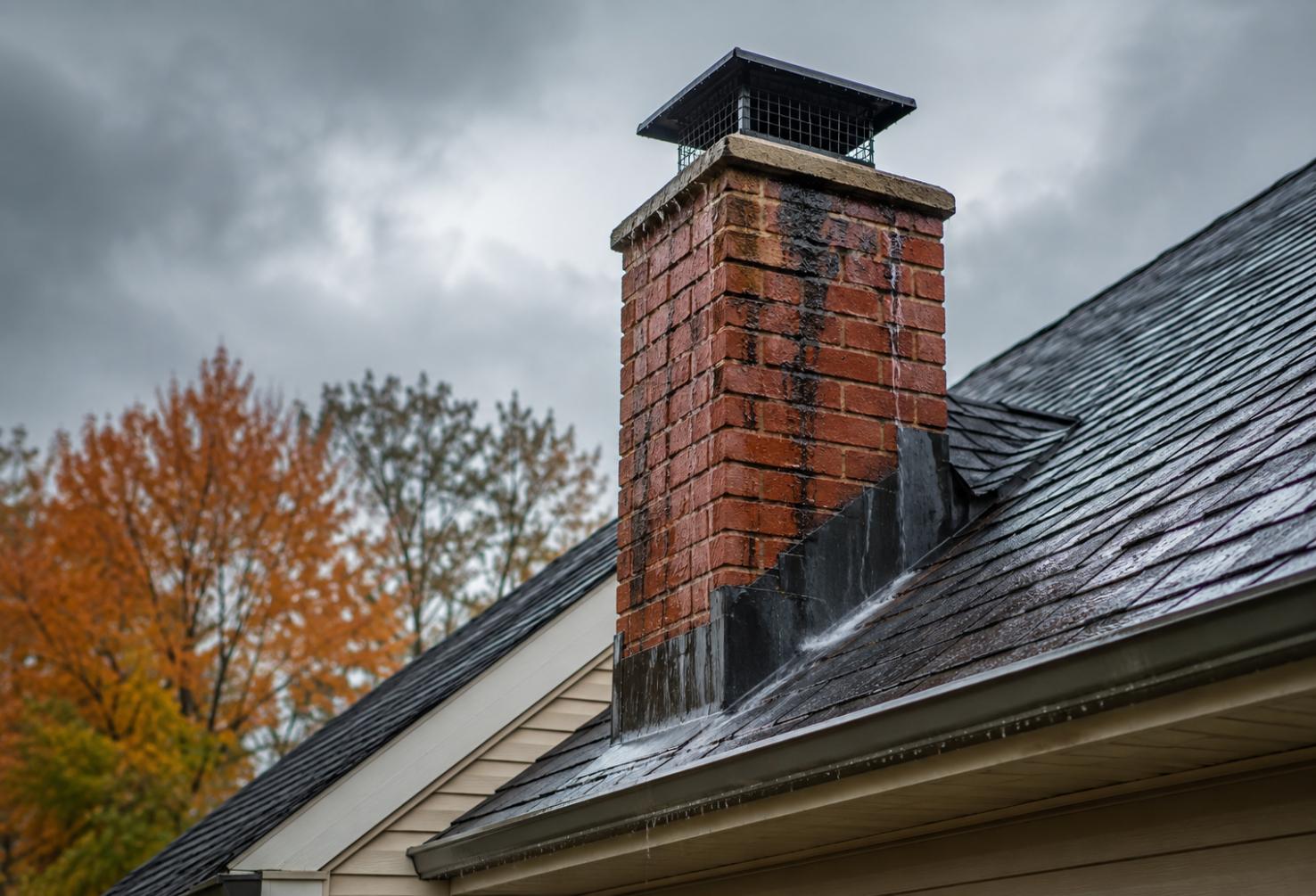
A chimney leak can be easy to miss until water stains appear on the ceiling, dampness develops around the fireplace, or masonry begins to deteriorate. For homeowners in Greensboro, periods of heavy rain, humid weather, wind-driven storms, and seasonal temperature changes can expose weaknesses around chimneys that have developed over time.
Quick answer: Chimney leaks are commonly caused by damaged flashing, cracked chimney crowns, deteriorated mortar joints, missing or damaged chimney caps, porous masonry, and problems where the chimney meets the roof. Finding the actual entry point matters because water showing up near a fireplace may have traveled through several parts of the chimney or roofing system before becoming visible indoors.
What local homeowners should know
-
Chimney leaks often begin outside long before water becomes noticeable inside the home.
-
Greensboro’s combination of rainfall, humidity, summer storms, and changing winter temperatures can gradually expose cracks and failed joints.
-
Older masonry homes in areas such as College Hill, Fisher Park, and Dunleath may require particular attention to aging mortar and brickwork.
-
A roof stain beside a chimney does not automatically mean the roof itself is the source of the leak.
-
Small exterior masonry problems can become more difficult to repair when water continues entering the chimney system.
Why Do Chimney Leaks Matter in Greensboro?
Chimney leaks matter in Greensboro because repeated moisture exposure can damage masonry, interior finishes, roof materials, and the areas where the chimney connects to the home. A small exterior defect can allow water to work behind flashing, enter mortar joints, or travel through the chimney structure before homeowners realize there is a problem.
Properties across Guilford County include everything from newer suburban construction to older brick homes with traditional masonry chimneys. Greensboro also has three locally designated historic districts, College Hill, Dunleath, and Fisher Park, where preserving exterior architectural character receives special attention from the City of Greensboro.
Greensboro Handyman & Masonry LLC helps local property owners evaluate masonry and repair concerns. When we look at a leaking chimney, the goal is to identify where water is entering instead of simply covering the most visible symptom.
What Do We Commonly See Around Local Chimneys?
Local chimney problems commonly involve aging mortar, cracked masonry components, deteriorated seals, and vulnerable roof-to-chimney connections. These are field observations rather than claims that every local chimney will develop the same problem, because chimney condition varies considerably with age, construction, maintenance, exposure, and previous repairs.
Homes in established neighborhoods such as Lindley Park, Irving Park, College Hill, and Fisher Park may have chimneys that have been exposed to decades of rainfall and seasonal weather. Newer homes are not immune either. Flashing failures, poorly sealed penetrations, or damaged caps can allow water into relatively young chimney systems.
How Can a Chimney Leak Affect Your Home?
A chimney leak can affect much more than the visible brick above the roofline because moisture may travel into ceilings, walls, framing, fireplace components, and surrounding roofing materials. The longer water has an open path into the structure, the greater the opportunity for deterioration to spread beyond the original defect.
Homeowners may first notice cosmetic problems such as staining or peeling paint. Continued moisture can also contribute to deteriorating mortar, damaged drywall, unpleasant odors, and weakened masonry surfaces.
This is particularly important during stretches of wet weather when materials may not have enough time to dry completely between rain events.
What Are the Warning Signs of a Chimney Leak?
The warning signs of a chimney leak usually include visible moisture, staining, masonry deterioration, or changes around the fireplace and chimney structure. Homeowners should pay attention to changes both inside and outside the house, especially after strong rain or wind-driven storms.
Watch for:
-
Water stains on ceilings or walls near the chimney.
-
Dampness inside or around the fireplace.
-
White powdery deposits appearing on brick or masonry.
-
Cracked, loose, or missing mortar joints.
-
Pieces of mortar or masonry collecting near the chimney.
-
Peeling paint or damaged drywall near the fireplace.
-
Rust on metal fireplace or chimney components.
-
Visible gaps around flashing where the chimney meets the roof.
One sign does not identify the cause by itself. The location and condition of the chimney need to be evaluated together.
When Should You Call a Professional?
You should call a professional when water is entering the home, masonry is visibly deteriorating, flashing appears damaged, or safely identifying the leak would require climbing onto the roof. Ground-level observation is reasonable for homeowners, but chimney and roof work introduces fall hazards and can require masonry or flashing repairs that must be properly diagnosed.
You can safely check ceilings, fireplace areas, accessible attic spaces, and visible portions of the chimney from the ground. Binoculars can sometimes help identify an obviously missing chimney cap or damaged masonry.
Avoid walking on a steep, wet, or unfamiliar roof simply to locate a leak.
What Are the Most Common Causes of Chimney Leaks?
The most common causes of chimney leaks are failed flashing, damaged crowns, deteriorated mortar, chimney cap problems, and masonry that allows excessive moisture penetration. More than one problem can exist at the same time, particularly on older homes that have received repairs in different stages.
1. Damaged or Failed Flashing
Flashing seals the transition between the roof and chimney. If flashing becomes loose, corroded, damaged, or improperly sealed, rainwater can enter the joint and travel into the home.
Wind-driven rain can make these weaknesses more noticeable because water is pushed against areas that may remain relatively dry during lighter rainfall.
2. Cracked Chimney Crowns
The crown covers the top surface of many masonry chimneys and directs water away from the flue and masonry below. Cracks can allow water into the top of the chimney structure.
Repeated wetting and temperature changes can gradually enlarge existing defects.
3. Missing or Damaged Chimney Caps
A chimney cap helps limit direct rain entering an open flue. A missing, loose, or damaged cap leaves the chimney more exposed to precipitation.
Caps can also help keep debris and animals from entering the chimney opening.
4. Deteriorated Mortar Joints
Mortar joints naturally weather over time. Once joints become cracked, recessed, or loose, water can penetrate spaces between the bricks.
Older properties near downtown Greensboro and in historic neighborhoods may deserve closer inspection simply because some masonry assemblies have been exposed to weather for many years.
5. Cracked or Deteriorated Brick
Individual bricks can crack, chip, or develop surface deterioration. Damaged masonry may absorb more moisture and allow water farther into the chimney structure.
Repair should address the condition of both the bricks and the mortar surrounding them.
How Can Homeowners Help Prevent Chimney Leaks?
Homeowners can help prevent chimney leaks by inspecting visible masonry regularly, keeping roof drainage functioning properly, and addressing small cracks or flashing problems before repeated rainfall makes them worse. Seasonal exterior checks are especially useful after severe storms and before extended periods of colder weather.
From the ground, look for missing caps, obvious cracks, loose mortar, leaning components, or visible flashing gaps. Keep gutters and nearby roof drainage paths clear so water does not collect unnecessarily around roof transitions.
DIY maintenance should stop when repairs require roof access, masonry removal, flashing replacement, or diagnosis of an active interior leak.
What Results Can You Expect From Chimney Leak Repair?
Proper chimney leak repair should address the specific pathway allowing water into the structure rather than simply hiding an interior stain. Depending on the cause, work may involve repairing mortar joints, correcting damaged masonry, replacing or repairing flashing, addressing the chimney crown, or repairing another exterior component.
The correct solution depends on the chimney’s condition. Some leaks have one clear source, while others involve several aging components.
After repairs, interior materials may also need adequate drying time before cosmetic damage is repaired.
What Mistakes Should Homeowners Avoid?
The biggest chimney leak mistakes are treating the visible symptom instead of the water source, delaying obvious masonry repairs, and attempting unsafe roof work without the proper equipment or experience.
Mistake: Applying sealant wherever water appears indoors.
Consequence: The actual exterior entry point can remain open.
Better approach: Trace the problem back to the chimney, roof connection, or masonry defect.
Mistake: Ignoring cracked mortar because the chimney still feels solid.
Consequence: Continued rainfall can reach deeper parts of the masonry assembly.
Better approach: Have deteriorated joints evaluated before damage becomes more extensive.
Mistake: Assuming every chimney leak requires a completely new chimney.
Consequence: Homeowners may overlook a repairable crown, flashing, cap, or mortar problem.
Better approach: Identify the cause before deciding between targeted repairs and larger reconstruction.
What Is a Common Greensboro Chimney Leak Scenario?
A common Greensboro chimney leak scenario is a homeowner noticing a ceiling stain beside the fireplace after a period of heavy rain, even though the chimney looked normal from the ground. An inspection may reveal deteriorated flashing, cracked mortar, crown damage, or another opening that is difficult to see without closer access.
This is a representative local scenario, not a specific customer case study. The important lesson is that the location of an indoor stain does not necessarily reveal the exact exterior entry point.
Which Services Can Address Chimney Leak Problems?
Chimney leak problems may require masonry repair, mortar joint repair, chimney crown work, flashing-related repairs, or correction of damaged exterior components depending on the source. A focused inspection helps determine which service is appropriate and whether several areas need attention together.
Our masonry work is intended to address the underlying exterior condition rather than relying on cosmetic interior fixes alone.
Should You Repair a Chimney Yourself or Hire a Professional?
DIY inspection is appropriate for simple ground-level observations, while professional service is the safer choice when diagnosing or repairing chimney masonry, flashing, crowns, or other roof-level components. The difference comes down to access, repair complexity, and whether the water’s path can be identified confidently.
A homeowner can document when the leak occurs, photograph interior staining, and visually check the chimney from a safe location. Professional evaluation becomes more useful when the source is unclear or exterior repairs are needed.
For historic properties, additional considerations may apply. The City of Greensboro states that exterior work in locally designated historic districts can require a Certificate of Appropriateness, so owners in College Hill, Dunleath, and Fisher Park should verify applicable requirements before making exterior alterations.
What Areas Do We Serve?
We serve homeowners in Greensboro and surrounding communities where chimney and masonry problems can develop from age, moisture exposure, and exterior wear. Our local service focus includes properties throughout the city and nearby parts of Guilford County.
Homeowners in neighborhoods such as Fisher Park, College Hill, Dunleath, Lindley Park, and Irving Park can encounter different masonry conditions depending on the age and construction of the property.
What Can Happen If You Ignore a Chimney Leak?
Ignoring a chimney leak can allow a relatively contained exterior problem to become a larger masonry, roofing, or interior repair issue. Water rarely improves a damaged mortar joint, flashing connection, or cracked crown on its own, and repeated wetting can expose additional weaknesses over time.
Waiting can also make diagnosis harder because moisture may spread away from the original entry point.
Frequently Asked Questions About Chimney Leaks
What causes most chimney leaks in Greensboro?
The most common potential causes include damaged flashing, deteriorated mortar joints, cracked chimney crowns, missing chimney caps, and damaged masonry. Greensboro homeowners may notice these problems most clearly during periods of sustained or wind-driven rain. An inspection is usually needed to determine which component is actually allowing water inside.
Can rain enter directly through a chimney?
Yes, rain can enter through an unprotected or damaged chimney opening, but direct entry through the flue is only one possible source. Water can also enter around flashing, through cracked crowns, or through deteriorated masonry. Finding the specific pathway prevents unnecessary repairs to components that are still functioning properly.
Are older Greensboro chimneys more likely to leak?
Older chimneys can have more weathered mortar, brick, flashing, and crown materials simply because they have experienced longer exposure. That does not mean every older chimney leaks. Homes in established areas such as College Hill or Fisher Park should be evaluated according to actual condition rather than age alone.
Can cracked mortar cause a chimney leak?
Yes, cracked or deteriorated mortar joints can provide pathways for moisture to enter a masonry chimney. The extent of the problem depends on the depth, location, and overall condition of the joints. Repointing or other masonry repairs may be appropriate when deterioration is localized and the surrounding masonry remains serviceable.
Why does my chimney only leak during heavy rain?
A chimney that leaks mainly during heavy rain may have an opening that becomes vulnerable when larger amounts of water or wind-driven rain reach it. Flashing joints, masonry cracks, and crown defects are possible causes. Observing when the leak occurs can provide useful information during an inspection.
Do chimney repairs in Greensboro historic districts require approval?
Some exterior projects can require approval. The City of Greensboro states that properties within the locally designated College Hill, Dunleath, and Fisher Park historic districts are subject to Certificate of Appropriateness requirements for exterior work. Homeowners should confirm the current requirements for their property before beginning applicable alterations.
Can I seal a leaking chimney myself?
A homeowner can perform basic visual checks, but applying a general masonry sealer without identifying the cause may not solve the leak. Water could be entering through flashing, mortar, the crown, or another component. Roof-level inspection and masonry repairs are generally better handled by someone equipped to perform them safely.
How quickly should I address a chimney leak in Guilford County?
An active chimney leak should be evaluated promptly because each additional rain event can introduce more moisture into the structure. Immediate emergency work is not necessary for every minor defect, but visible indoor water, deteriorating masonry, or loose materials are good reasons to arrange professional evaluation rather than waiting for another season.
Protect Your Home From Ongoing Chimney Water Damage
Finding a chimney leak early gives Greensboro homeowners a better opportunity to correct the source before repeated moisture affects additional parts of the property. We can evaluate chimney and masonry concerns and help determine what type of repair makes sense for the condition we find.
Stop Water at the Source
Get clear answers about the masonry or chimney problem affecting your home.